

Effective Rehabilitation
In several of India’s forest-rich regions, there is a significant opportunity to align the abundance of natural resources with the socio-economic advancement of the local inhabitants, many of whom belong to Scheduled Tribes and Scheduled Castes. Currently, while these areas contribute greatly to national resource security, the transition toward industrial land use can present challenges for small-scale farmers and traditional laborers whose livelihoods are closely tied to the land.
The process of land acquisition for national development aims to balance industrial needs with public welfare. However, when local communities are transitioned away from their traditional lands, it is essential that the compensation and resettlement frameworks provide more than just immediate financial relief. True rehabilitation requires a holistic approach that preserves the social and cultural identity of the community, ensuring that the transition does not lead to the fragmentation of village structures or the erosion of long-standing social bonds.
Data from various administrative reviews suggests that a significant number of individuals have been affected by land acquisition processes over the past several decades. Strengthening the implementation of modern laws, such as the Right to Fair Compensation and Transparency in Land Acquisition, Rehabilitation and Resettlement (RFCTLARR) Act, 2013, is crucial. Our goal is to support the government’s commitment to ensuring that no community is left behind and that “rehabilitation” encompasses comprehensive socio-economic integration.
By fostering a model where local residents are primary stakeholders in regional development—through specialized skill-building and priority employment—we can transform resource-rich areas into hubs of inclusive growth. Securing the rights and futures of these communities ensures that the path to industrial progress remains both socially sustainable and ethically grounded.
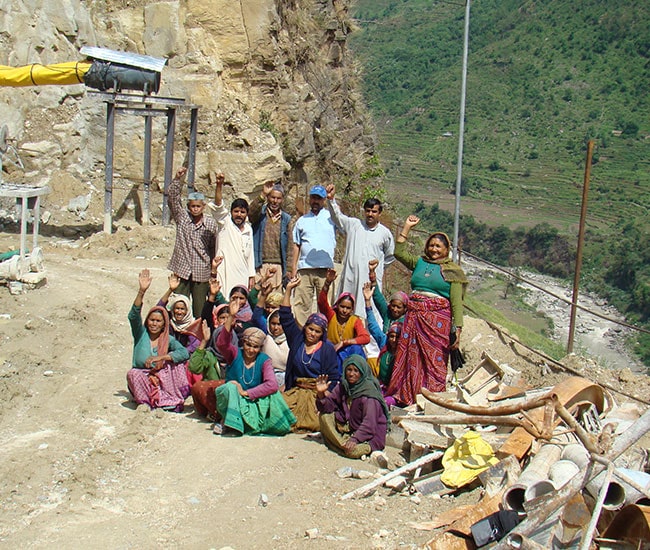
National infrastructure and industrial expansion are considered essential drivers of economic growth and public welfare. Since the early 1990s, policies encouraging investment and export-oriented production have significantly accelerated the pace of these projects, contributing to India’s integration into the global economy. The acquisition of land for power plants, transport corridors, and specialized industrial hubs is a key component of this development journey.
To ensure that this rapid growth remains sustainable and inclusive, it is vital to evaluate the socio-economic impact on local communities. Development is most effective when it creates shared value; therefore, our focus is on ensuring that the residents of project-affected areas are active participants in—and beneficiaries of—this progress. Protecting the natural environment during industrial expansion is equally critical, as long-term economic stability depends on a healthy ecological foundation.
Our organization supports this vision by facilitating transparency and informed participation at the grassroots level. Our Fellows work closely with village communities to provide them with accurate information regarding upcoming projects, helping them understand their rights and the procedural safeguards provided by the law. By fostering public discussion and information-sharing, we assist in creating a platform for constructive dialogue between local residents, government agencies, and private stakeholders.
Rather than viewing development as a zero-sum process, we believe in a model of cooperative accountability. Our initiatives aim to unify diverse local voices to engage professionally with state authorities. This ensures that the social and environmental costs of resource-intensive projects are accurately assessed and mitigated. By advocating for a model that balances industrial objectives with local livelihoods, we contribute to a future that is both economically robust and socially equitable.