

Access to Natural Resources
For millions of people in rural India, secure access to land, water, and forest resources is the foundation of economic stability and food security. Historically, local communities have acted as effective guardians of these ecosystems. By exercising traditional management practices, they have successfully balanced their daily subsistence needs with the long-term conservation of biodiversity, preventing the over-exploitation of natural assets.
Modern development challenges have occasionally created gaps in this traditional relationship. In many instances, the transition toward large-scale commercial land use has impacted the traditional livelihoods of village communities. Enhancing the legal and tenurial security of these citizens is essential to protecting the natural resource base upon which both local life and broader ecological health depend.
The current framework for resource management has its roots in historical administrative systems that centralized the control of forests and water bodies. Moving forward, there is a significant opportunity to evolve these systems toward a more participatory model. By strengthening the implementation of pro-people laws like the Forest Rights Act, we can address historical displacements and provide marginalized populations with the security they need to thrive.
Ensuring that local communities are recognized as key stakeholders in resource management is vital for achieving a balanced model of growth. When communities have clear, recognized rights, they are better positioned to contribute to national conservation goals while building a secure and dignified future for themselves.
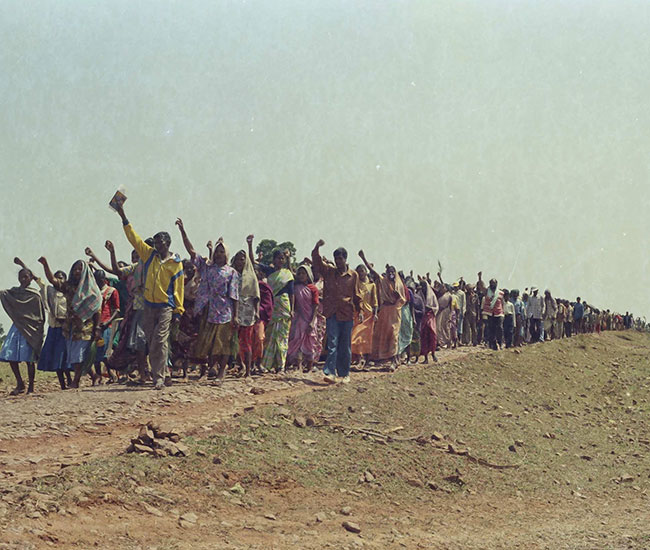
Access to Natural Resources
SRUTI is dedicated to strengthening the socio-economic resilience of rural and tribal communities by fostering an inclusive approach to natural resource management. By focusing on legal literacy and administrative support, we aim to ensure that the implementation of the Forest Rights Act (FRA), 2006 serves as a robust foundation for poverty alleviation. We prioritize the formal recognition of both individual and community forest resource rights, which provides households with the tenurial security necessary to invest in long-term, sustainable land-use practices and protects them from arbitrary displacement.
To ensure holistic development, our initiatives are closely aligned with the United Nations Sustainable Development Goals (SDGs). We specifically contribute to SDG 1 (No Poverty) and SDG 10 (Reduced Inequalities) by empowering marginalized groups to secure their legal entitlements to land and resources. Furthermore, our focus on community-led forest management supports SDG 13 (Climate Action) and SDG 15 (Life on Land), as traditional knowledge and local stewardship are proven to be more effective in conserving biodiversity, preventing land degradation, and enhancing carbon sequestration compared to centralized management models.
A core component of our strategy is the convergence with existing government frameworks to maximize the benefits reaching the grassroots level. Once community rights are recognized, we facilitate access to the Mahatma Gandhi National Rural Employment Guarantee Scheme (MGNREGA) for forest restoration and water conservation projects. We also work to link tribal collectives with various government schemes, which provides the infrastructure and training needed for value-addition of non-timber forest produce. By bridging the gap between national policy and local implementation, we help build a self-reliant rural economy that balances economic growth with ecological integrity.
Our role is to support the Gram Sabhas (village councils) and community leaders. We provide training on digital mapping, document verification, and the preparation of Community Forest Resource (CFR) management plans. This administrative assistance helps streamline the work of administration and local governance bodies, and ensures that the legal mandates of the state are fulfilled in a transparent and timely manner. Through this collaborative approach, we strive to transform natural resource management into a vehicle for social justice and environmental sustainability, ensuring that the primary protectors of the forest are also the primary beneficiaries of its preservation.